
Artificial Intelligence (AI) and automation are no longer future concepts. They are already deeply integrated into everyday life, shaping how people work, communicate, shop, and even make decisions. From simple mobile apps to advanced industrial systems, AI and automation are transforming the world at a rapid pace.
Understanding these technologies is becoming increasingly important, not just for tech professionals but for students, business owners, and everyday users. The goal of this guide is to explain AI and automation in a simple and practical way, how they work, where they are used, and what their future may look like.
What is Artificial Intelligence
Artificial Intelligence refers to the ability of machines to perform tasks that normally require human intelligence. These tasks include learning, reasoning, problem-solving, understanding language, and recognizing patterns.
AI systems are designed to analyze large amounts of data and make decisions based on that information. For example, when a streaming platform suggests movies based on your viewing history, it is using AI. When a navigation app finds the fastest route through traffic, that is also AI in action.
AI is not a single technology. It is a combination of different techniques such as machine learning, deep learning, and natural language processing. These systems improve over time as they are exposed to more data.
What is Automation
Automation refers to the use of technology to perform tasks with minimal human involvement. In simple terms, it means machines or software handle repetitive or routine work automatically.
Automation has been used in industries for many years, especially in manufacturing. However, modern automation is now powered by software and AI, making it more advanced and flexible.
For example, email filters that automatically sort spam messages, or chatbots that respond to customer queries on websites, are forms of automation. In businesses, automation is used to manage payroll, inventory, customer support, and data entry.
Difference Between AI and Automation
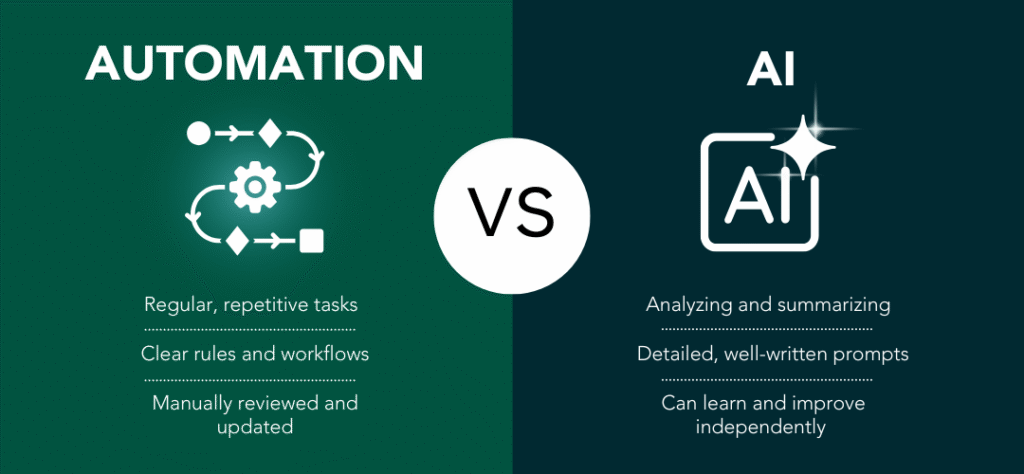
Although AI and automation are often used together, they are not the same.
Automation follows predefined rules. It performs tasks exactly as programmed without learning or adapting on its own. AI, on the other hand, can learn from data and improve its performance over time.
When AI and automation are combined, the result is intelligent automation. This means systems can not only perform tasks but also make decisions and adapt to new situations. This combination is what is driving many modern technological advancements.
How AI and Automation Work Together
AI and automation complement each other in powerful ways. Automation handles repetitive tasks quickly and efficiently, while AI adds intelligence and decision-making capabilities.
For example, in customer service, automation can route a query to the correct department, while AI can understand the customer’s message and provide an instant response. In manufacturing, automation controls machines, while AI predicts maintenance needs before breakdowns occur.
This combination improves speed, accuracy, and productivity across industries.
Applications of AI and Automation in Daily Life
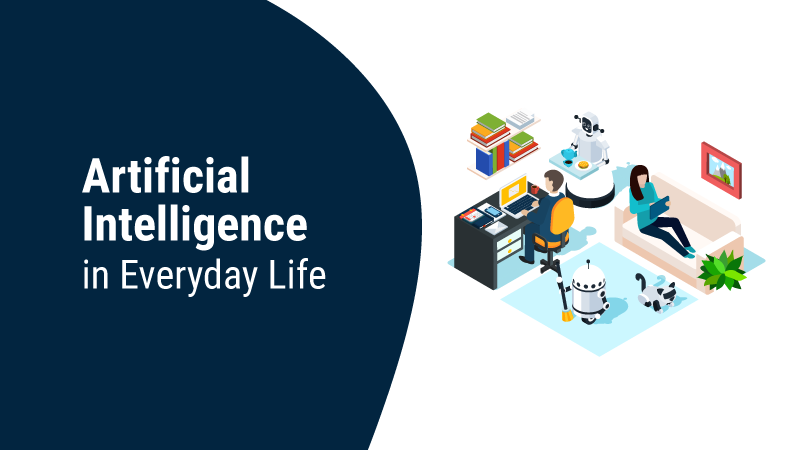
AI and automation are already part of daily routines, even if people do not always realize it.
In smartphones, AI helps with voice assistants, facial recognition, and predictive text. Social media platforms use AI to show personalized content. Online shopping websites recommend products based on browsing history.
In transportation, ride-hailing apps use automation to match drivers with passengers and calculate fares. Navigation systems use AI to predict traffic conditions.
Even in homes, smart devices like thermostats, lights, and security systems use automation to make life more convenient.
AI and Automation in Business

Businesses are among the biggest users of AI and automation. These technologies help companies reduce costs, improve efficiency, and make better decisions.
Customer support is one major area where automation is widely used. Chatbots handle common questions, allowing human agents to focus on complex issues.
In marketing, AI analyzes customer behavior to create targeted advertisements. This helps businesses reach the right audience more effectively.
In finance, AI is used for fraud detection, risk analysis, and financial forecasting. Automation handles repetitive tasks like invoice processing and payroll management.
In supply chain management, AI predicts demand while automation manages inventory and logistics.
Benefits of AI and Automation
One of the biggest benefits of AI and automation is increased efficiency. Tasks that once took hours or days can now be completed in seconds.
Another benefit is accuracy. Machines do not get tired or distracted, which reduces the chances of errors in repetitive tasks.
Cost reduction is also a major advantage. Businesses can save money by automating routine processes and reducing manual labor requirements.
AI also improves decision-making by analyzing large amounts of data quickly. This helps organizations make more informed choices.
For individuals, AI-powered tools make everyday tasks easier, from organizing schedules to finding information quickly.
Challenges and Concerns
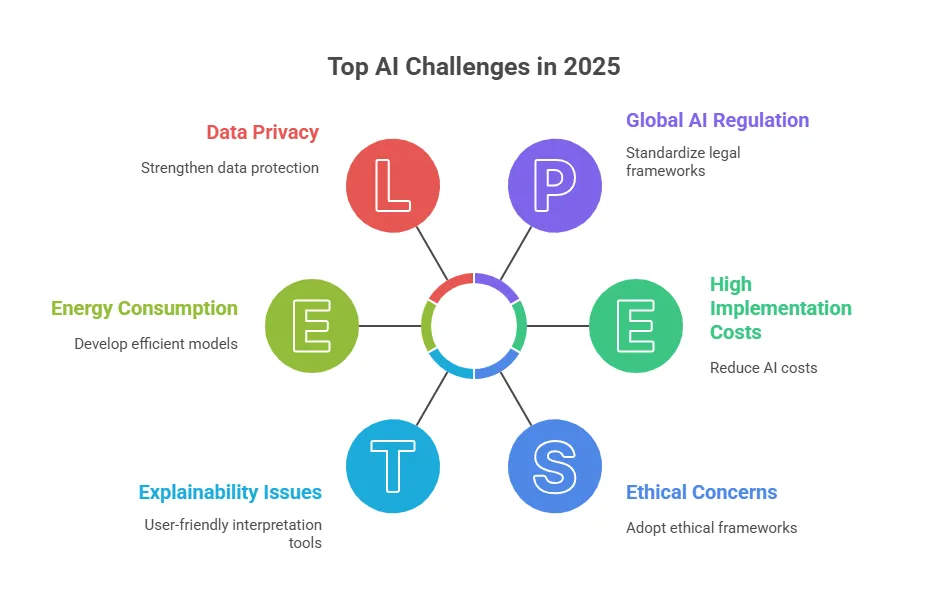
Despite its benefits, AI and automation also come with challenges.
One major concern is job displacement. As machines take over repetitive tasks, some traditional jobs may become less needed. However, new jobs are also being created in areas like AI development, data analysis, and system management.
Another concern is data privacy. AI systems rely on large amounts of data, which raises questions about how personal information is collected and used.
There is also the risk of overdependence on technology. Relying too much on automated systems can reduce human involvement in decision-making.
Ethical issues are also important, especially when AI systems make decisions that affect people’s lives.
Future of AI and Automation
The future of AI and automation is expected to be highly advanced and deeply integrated into all areas of life.
In the coming years, AI systems will become more intelligent and capable of understanding human emotions and intentions more accurately. Automation will become more flexible and adaptive, allowing systems to handle complex tasks without constant human input.
Industries such as healthcare, education, transportation, and manufacturing will see major transformations. Self-driving vehicles, AI-powered medical diagnosis, and personalized learning systems are already being developed and tested.
The combination of AI and automation will continue to shape the global economy and redefine how people work and live.
Skills Needed in the AI Era

As AI and automation grow, certain skills are becoming more important.
Technical skills such as programming, data analysis, and machine learning are in high demand. However, soft skills like creativity, critical thinking, and problem-solving are equally important.
People who can work alongside AI systems rather than compete with them will have better opportunities in the future.
Continuous learning is also essential. Since technology is evolving rapidly, staying updated is necessary to remain relevant in the job market.
How to Start Learning AI and Automation
Anyone interested in AI and automation can start with basic learning resources available online. Many platforms offer beginner-friendly courses that explain the fundamentals.
Starting with simple programming languages like Python can be helpful. Understanding data and basic algorithms is also important.
Practical experience is key. Working on small projects helps build confidence and real-world understanding.
As knowledge grows, learners can move on to more advanced topics like machine learning and robotics.
FAQ’s
10 Innovative Tech & Software Tools That Make Work Easier
Technology has quietly become the gentle wind that moves modern work forward. Like a river…

10 Innovative Tech & Software Tools That Save Time and Money
Technology has quietly become part of almost every moment in our lives. From the first…

The Ultimate Digital Marketing Blueprint for Business Growth in 2026
The digital world moves like a flowing river. Every year, new platforms appear, customer expectations…

10 Powerful AI & Automation Tools That Save Time Every Day
This is where AI & Automation begins to make a meaningful difference. Instead of replacing…

10 Powerful Tools & Tutorials That Can Transform Your Daily Workflow
Every day brings a fresh opportunity to accomplish something meaningful, yet many of us find…

Best Tech & Software for Students, Professionals, and Creators
Technology has become one of the strongest driving forces behind education, business, and creativity. In…