
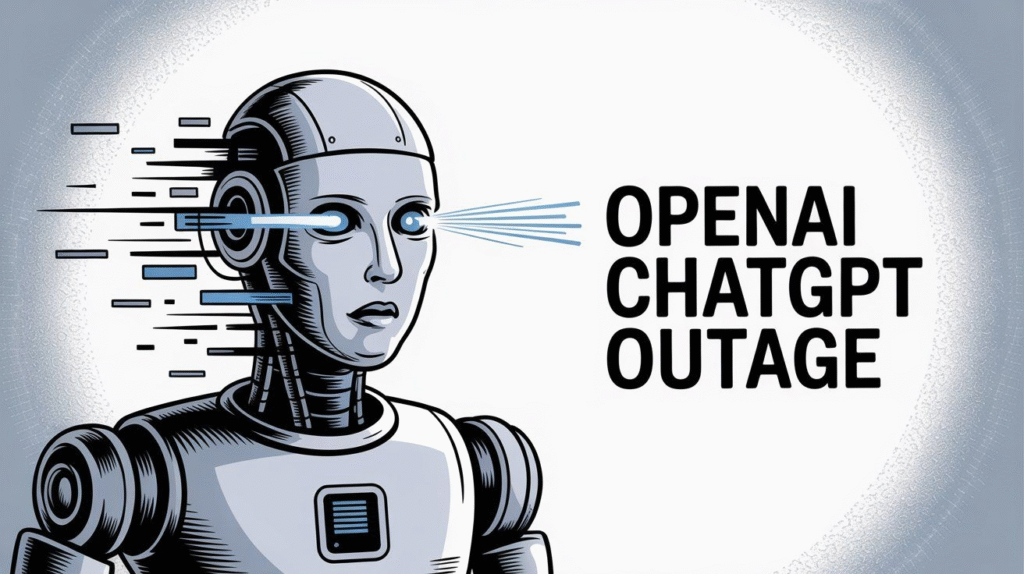
ChatGPT experienced a worldwide service outage, affecting millions of users across multiple regions. The AI chatbot, widely used for content creation, coding, research, education, and customer support, became inaccessible for many, with users reporting blank screens, slow responses, and repeated error messages. The disruption quickly gained attention as individuals and businesses realized the scale of the issue.
OpenAI Officially Acknowledges Service Disruption
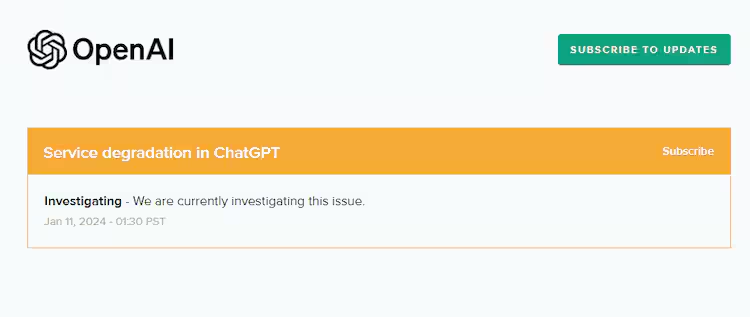
OpenAI confirmed the outage through official communication, stating that ChatGPT was “experiencing issues” due to a major technical problem. The company assured users that its engineering teams were actively investigating the incident and working to restore normal operations. While specific technical details were not immediately shared, OpenAI emphasized that user data security was not compromised.
Key Issues Reported by Users During the Outage
During the outage period, users across different platforms encountered several operational problems. Many reported being unable to log in, while others experienced incomplete responses or total service failure. OpenAI’s API services were also partially affected, impacting third-party applications and tools built on ChatGPT’s infrastructure.
Impact on Businesses, Developers, and Daily Workflows
The global ChatGPT outage had a noticeable impact on businesses and professionals who rely on AI-driven tools for daily operations. Companies using ChatGPT for automated customer support, software development assistance, SEO content creation, and data analysis faced workflow interruptions. Developers integrating ChatGPT APIs into live products also reported performance degradation, highlighting the platform’s growing role in digital ecosystems.
Possible Causes Behind the ChatGPT Outage
Although OpenAI has not released a detailed technical breakdown, industry experts suggest several possible causes. These may include cloud infrastructure failures, unexpected traffic surges, server overload, or routine maintenance issues. Large-scale AI platforms operate on complex systems, making them vulnerable to cascading failures during peak usage or system updates.
OpenAI’s Response and Recovery Efforts
OpenAI stated that teams were actively monitoring system performance and deploying fixes to stabilize services. Users were encouraged to follow updates via OpenAI’s official status channels for real-time information. The company reiterated its commitment to platform reliability, transparency, and continuous improvement.
Why the ChatGPT Outage Is Significant
This incident underscores how deeply ChatGPT has become embedded in global digital workflows. From education and research to enterprise automation, even a short disruption can have widespread consequences. The outage serves as a reminder of the importance of infrastructure resilience and contingency planning when relying on AI-powered services.
What Users Should Do During Service Disruptions
During outages, users are advised to monitor official updates, avoid repeated login attempts, and temporarily rely on alternative AI or productivity tools. Businesses using ChatGPT at scale may also consider backup solutions to minimize downtime during unexpected service interruptions.
Before vs After ChatGPT Outage Comparison
| Aspect | Before Outage | After Outage |
|---|---|---|
| Platform Access | Smooth & instant | Login failures & errors |
| Response Speed | Fast & reliable | Slow or no responses |
| Business Usage | Automated & efficient | Workflow disruptions |
| API Performance | Stable integrations | Partial or full downtime |
| User Trust | High confidence | Temporary concerns |
FAQs
#ChatGPTDown #ChatGPTOutage #OpenAI #OpenAIOutage #Carrerbook #Anslation #ChatGPTNotWorking #AIOutage #TechNews #BreakingTech #ArtificialIntelligence #GlobalOutage #TechUpdate #AIPlatform #DigitalDisruption #APIDown #CloudServices #FutureOfAI