
Artificial intelligence has slowly moved from being a futuristic idea to becoming part of everyday technology. We see it in search engines, smartphones, banking apps, and many other places. AI in Healthcare is another area where AI is finding practical uses.
Hospitals, researchers, doctors, and healthcare organizations are exploring AI for a wide range of tasks. It can help examine medical images, organize large amounts of information, support research, assist with routine administrative work, and monitor certain types of health data.
That does not mean a computer is taking over the role of a doctor. In fact, much of the current discussion around AI in healthcare is about support. A computer can process information quickly, but healthcare decisions often require experience, communication, and an understanding of the individual patient.
There is also another side to the conversation. Medical information is private, mistakes can have serious consequences, and an AI system can sometimes produce an incorrect result. So while the technology is promising, it needs to be used carefully.
What Is AI in Healthcare?

AI in healthcare means using artificial intelligence to assist with different medical and healthcare-related activities. Depending on the technology, an AI system may analyze information, recognize patterns, organize data, or provide suggestions for further review.
Machine learning is one of the technologies commonly used in this area. A machine-learning system can learn patterns from large datasets and then use those patterns when processing new information. Natural language processing is another useful area because it allows computer systems to work with written or spoken human language.
AI can be connected with many other healthcare technologies too. Medical imaging systems, electronic health records, wearable devices, online healthcare platforms, and research databases can all potentially work alongside AI.
The purpose is different in each case. An AI tool designed for medical imaging will not necessarily work in the same way as one designed for hospital administration.
Why Is AI Becoming Important in Healthcare?
Healthcare generates an enormous amount of information.
Think about everything involved in a single patient’s care: previous medical records, test reports, prescriptions, scans, laboratory results, appointments, and notes from healthcare professionals. Hospitals also deal with information about staff, beds, schedules, medicines, billing, and many other daily activities.
Going through all this information manually can take time. AI can help process certain kinds of information much faster.
For example, an AI system may examine a medical image and highlight an area that deserves a closer look. A doctor can then review that information along with the patient’s symptoms, history, and other test results.
This is one reason AI is attracting attention in healthcare. It can handle some information-heavy tasks while leaving the final clinical decisions to trained professionals.
AI in Medical Diagnosis

Medical diagnosis is one of the most discussed applications of AI.
Doctors often have to consider several pieces of information before identifying a health condition. Symptoms alone may not tell the complete story. Test results, medical history, physical examination, and imaging may all be relevant.
AI can help analyze some of these sources of information.
Medical imaging is a good example. AI-based tools can be developed to examine X-rays, CT scans, MRI images, and other medical images. Depending on the system, the technology may identify patterns or highlight areas that need further examination.
This can be useful because medical professionals sometimes have to review a large number of images. An additional computer-assisted review may help draw attention to something that deserves closer inspection.
Still, an AI result is not automatically a diagnosis. A patient’s situation is more complicated than a single image or computer-generated result. Doctors need to consider the full clinical picture before making decisions.
That distinction is important when discussing AI in healthcare. The technology can assist with analysis, but professional medical judgment remains essential.
AI and Personalized Healthcare
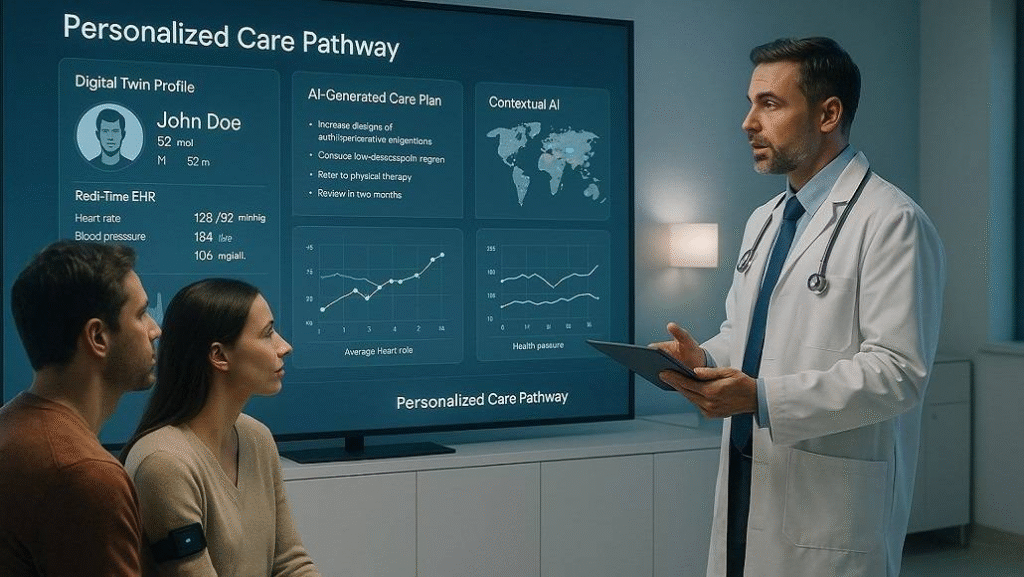
Healthcare is not exactly the same for everyone.
Two people can have the same condition but have different medical histories, lifestyles, ages, or other circumstances. Their healthcare needs may therefore differ.
AI is being explored as a way to analyze information from multiple sources and support more personalized approaches to healthcare.
Researchers can use AI to examine large datasets and look for relationships between patient characteristics and treatment outcomes. This type of analysis may help researchers understand why certain approaches work differently for different groups of people.
Personalized or precision medicine is still developing, and there are limitations. The quality of an AI system depends partly on the quality of the information used to train and operate it.
If the data is incomplete or does not properly represent the people who will use the system, the results may not be equally useful for everyone.
AI in Drug Discovery
Creating a new medicine is a long and complicated process. Researchers have to study diseases, investigate potential compounds, conduct experiments, and eventually test treatments carefully.
AI can help with some parts of this research.
Instead of manually examining every piece of information, researchers can use AI systems to analyze large amounts of scientific and biological data. These systems may identify patterns or relationships that can be investigated further.
AI can also be used in some research settings to study molecules and make predictions about how they might behave. does not mean that a computer can simply invent a medicine and put it on the market.
Laboratory research, testing, clinical studies, and safety evaluation are still necessary.
The useful part is that AI can help researchers narrow down possibilities and work with complicated datasets more efficiently.
AI and Patient Monitoring
Healthcare is no longer limited to what happens inside a hospital.
Wearable devices and other digital health technologies can collect different types of information. Depending on the device, this might include activity levels, heart rate, sleep information, or other measurements.
AI can be used to examine some of this data and look for changes or patterns.
This can be particularly interesting for remote monitoring. Instead of requiring every piece of information to be collected during an in-person visit, certain data can be gathered through digital devices and reviewed remotely.
However, technology is only as useful as the information it receives. A device may produce inaccurate readings, or an AI system may misunderstand a pattern.
For that reason, AI-generated alerts should be reviewed appropriately rather than being treated as automatic medical decisions.
AI in Hospitals and Healthcare Management

Not every healthcare task involves treating a medical condition.
Hospitals have a huge amount of administrative work to handle. Appointment scheduling, documentation, patient records, staff coordination, billing, communication, and other routine activities all require time.
Some AI-powered systems can assist with these tasks.
For example, an automated system might help organize information or answer simple questions about appointments and services. This can reduce some repetitive work for staff.
The benefit may seem small compared with medical diagnosis, but saving time on routine tasks can still matter in a busy healthcare environment.
The idea is not to automate every interaction. Patients still need people who can listen, explain information, understand unusual situations, and respond with empathy.
AI-Powered Healthcare Assistants
AI chatbots and virtual assistants are also appearing in healthcare-related services.
A healthcare website, for instance, may use an automated assistant to help visitors find information about appointments, services, or general health topics.
This can be convenient when someone simply needs basic information and does not require a detailed medical consultation.
However, there is a clear difference between general health information and medical advice.
An AI system can misunderstand a question or provide incomplete information. It may also fail to recognize important details that a healthcare professional would notice during a proper consultation.
For that reason, people should be careful about using general-purpose AI tools for personal medical decisions. When a health concern is serious or unclear, speaking with a qualified healthcare professional is the safer approach.
Benefits of AI in Healthcare

AI has several potential benefits when it is developed and used responsibly.
Faster Information Processing
Healthcare professionals often deal with large amounts of data. AI can process certain datasets quickly and help bring relevant information to attention.
Assistance for Healthcare Professionals
AI can provide another layer of information for doctors, researchers, and other healthcare workers. It may identify patterns or organize information that professionals can then review.
Less Repetitive Work
Administrative tasks can take up a significant amount of time. Automation may reduce some repetitive work and allow staff to concentrate on responsibilities that require human involvement.
Support for Medical Research
Researchers can use AI to examine large datasets and explore questions related to diseases, treatments, and biological processes.
Remote Monitoring
AI can work with digital health technologies to analyze information collected outside traditional healthcare settings.
These benefits are potential advantages rather than guarantees. The results depend on how the technology is designed, tested, and used.
Challenges of AI in Healthcare
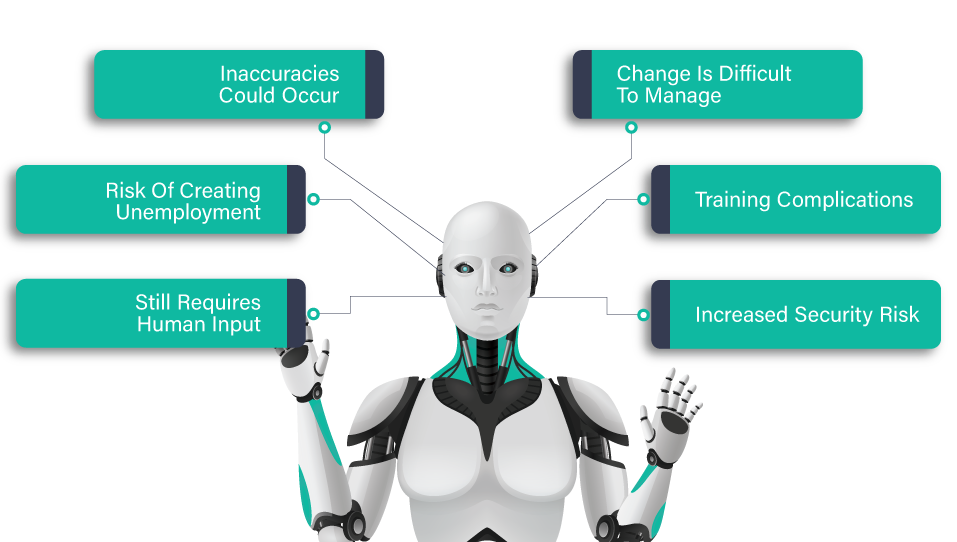
Healthcare is a sensitive field, so adopting AI is not as simple as installing new software.
There are several issues that need attention.
Patient Privacy
Medical records contain sensitive personal information. Healthcare organizations need appropriate safeguards to prevent unauthorized access and misuse of patient data.
Accuracy
AI systems can make mistakes. A result that looks convincing is not necessarily correct.
This is especially important in healthcare because an incorrect result can affect what happens next. AI systems therefore need careful testing and appropriate human oversight.
Bias in Data
AI learns from data. If the information used to develop a system does not represent different groups adequately, the system may perform differently for different populations.
This is one reason diverse and high-quality data matters when developing healthcare technology.
Understanding the Patient
A patient’s health cannot always be explained through numbers and records.
Someone’s concerns, family situation, lifestyle, communication, and personal preferences may all be relevant. A computer system may not understand these details in the same way a healthcare professional can.
Responsibility
Another important question is accountability.
If an AI system contributes information to a healthcare decision, there needs to be clarity about who reviews that information and who is responsible for the final decision.
Will AI Replace Doctors?
This is probably one of the first questions people ask when they hear about AI in medicine.
The reality is that healthcare involves much more than processing information.
Doctors communicate with patients, ask questions, perform examinations, explain treatment options, consider medical histories, and make decisions in situations that may not have a simple answer.
AI can help with certain tasks, but it does not automatically provide all of those abilities.
A more practical way to look at healthcare AI is as a tool that can work alongside medical professionals. A computer may process information quickly, while a healthcare professional provides context and judgment.
The relationship between the two will likely continue to change as the technology develops.
The Future of AI in Healthcare
The future of healthcare AI will probably involve more connections between different digital systems.
Electronic health records, medical imaging, wearable devices, telemedicine platforms, and research databases could increasingly work alongside AI technologies.
AI systems may also become more specialized. Instead of expecting one tool to handle every healthcare problem, organizations may use different systems for different purposes.
One system could focus on medical images, another on administrative work, and another on research data.
Regulation will also remain important. Healthcare organizations need processes for testing AI systems, checking their performance, protecting patient information, and responding when something goes wrong.
Technology may become more advanced, but trust will still matter. Patients and healthcare professionals need to understand what an AI system can do and where its limitations are.
How Patients Can Use Healthcare AI Carefully

AI is already available through health apps, wearable devices, websites, and digital assistants. That makes it important for people to understand how to use these tools sensibly.
Before entering personal information into a healthcare-related AI service, check what the service is designed to do and how the information is handled.
It is also worth remembering that an AI-generated answer is not automatically correct. If the information seems confusing or does not match advice from a healthcare professional, it should not simply be followed without question.
AI can be useful for learning about general health topics or understanding unfamiliar terms. Personal medical decisions, however, may require professional advice.
FAQ’s

AI in Healthcare: The Future of Medical Technology
Artificial intelligence has slowly moved from being a futuristic idea to becoming part of everyday…

Digital Payments: Easy and Secure Ways to Pay Online
Remember when paying for something meant checking your wallet first? You would count the notes,…

The Best Communication and Collaboration Tools for Teams
Working and Best Communication with a team is not always as easy as it looks….

Best Investment Options for Beginners to Grow Their Money
Starting to invest can feel a little confusing, especially when you hear people talking about…
The Best Marketing Tools for Business Growth
Running an online business alone often feels like a constant scramble. You might spend one…

Important Insurance Tips to Save Money and Stay Protected
Insurance is one of those things people often think about only when something goes wrong….