
I never really thought of myself as a DIY person. Whenever I saw people making beautiful things at home, I would notice how neatly everything was cut and how perfectly the final piece looked. My first thought was usually that I would probably make a mess if I tried the same thing.
Then I started noticing how many things around the house could actually be reused.
An empty jar does not have to remain an empty jar. An old box can become a storage container. Leftover paper can be turned into a bookmark or some small decoration. Even packaging that would normally go into the waste can sometimes be useful for a simple DIY project.
That is what makes DIY interesting to me. You don’t always start with a perfect plan. Sometimes you simply look at something you already have and think, “Can I use this for something else?”
Of course, not every project turns out perfectly. Sometimes the paper gets cut unevenly, the paint colour looks different after drying, or you use far more glue than you actually needed. That is part of figuring things out.
If you are new to DIY, I would honestly start with small projects. They are easier to finish, and you get a chance to understand what kind of crafts you actually enjoy.
Start With Something You Would Actually Use

Before choosing a DIY project, I would ask one simple question: Will I use this after I make it?
There is nothing wrong with making decorations just for fun, but useful DIY projects can be more satisfying when you are starting out.
A DIY desk organizer, for example, gives you somewhere to keep your pens. A decorated jar can hold small things. A handmade bookmark can actually be used every time you read.
There is also less pressure when the DIY project has a purpose. If the finished item is a little uneven, it still has a use.
And once you get comfortable making useful things, decorative projects become easier to experiment with.
1. Make a Photo Frame From Cardboard

This is one of the first DIY projects I would suggest to someone who has never tried DIY before.
You don’t need to buy a ready-made frame. A strong piece of cardboard from an old package can work surprisingly well.
What You Need
- Thick cardboard
- One photograph
- Pencil
- Ruler
- Scissors
- Glue
- Coloured paper or paint
- Ribbon, stickers or other small decorations
How I Would Make It
I would start with the photograph because its size determines everything else.
Place it on the cardboard and mark the area around it. Leave some extra space around the photograph for the actual frame.
Then carefully cut the centre section where the picture will be visible.
The cutting part is probably where you need the most patience. If the edges are uneven, don’t panic. Once you cover the cardboard, small imperfections may not even be noticeable.
Cover it with coloured paper or paint it. After it has dried, decorate the border.
I would keep the decoration fairly simple. A few paper flowers, a ribbon or some stickers can be enough.
Then put the photograph inside and decide whether you want to keep it on your desk, shelf or wall.
2. Reuse an Empty Glass Jar
I always think empty jars are worth keeping for a little while before deciding to throw them away.
A clean jar can become a pen holder, brush holder, small storage container or even a simple planter.
What You Need
- Empty glass jar
- Paint or coloured paper
- Glue
- Ribbon, jute or thread
- Stickers, if you want to add them
How I Would Make It
First, wash the jar properly and remove the old label. Let it dry completely.
You can leave the glass mostly uncovered if you like the simple look. Another option is to paint only the lower part or wrap some jute around the middle.
For a desk, I would probably use it as a pen holder. For a bedroom, you could turn it into a small decorative container.
There is no need to follow one exact design. The same jar can look completely different depending on the colours and materials you use.
3. Turn Old Boxes Into a DIY Desk Organizer
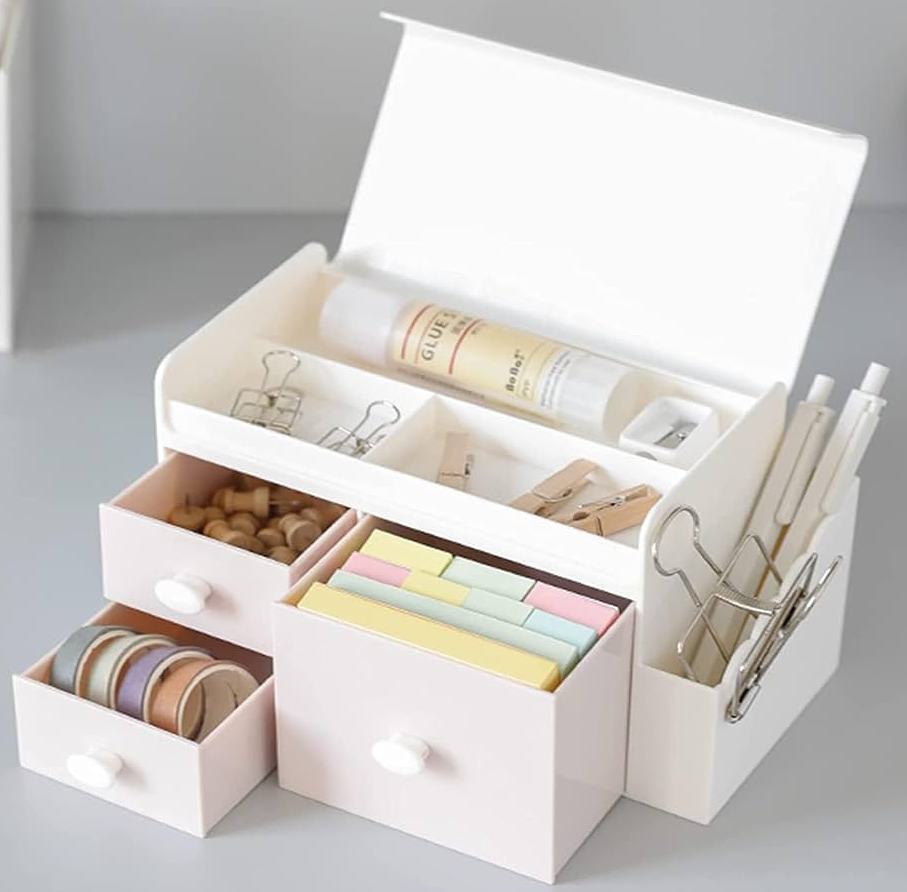
My desk can easily collect little things that don’t seem to have a proper place. Pens, paper clips, notes, chargers and other small items somehow end up together.
Old boxes can help with that.
How to Make It
Look for a few small boxes that are still in good condition.
Before decorating them, place them on your desk and see how you want them arranged. Maybe one box is enough. Maybe you need two or three.
Once you have decided, cover them with paper or paint them.
You can also write small labels on them. For example, one can be for stationery and another for cables.
I wouldn’t spend too much time trying to make the boxes look perfect. If they are strong enough and help keep the desk organised, they have already done what you needed.
4. Create a DIY Paper Wall Decoration
If you want to DIY decorate a room without spending much money, paper can give you plenty of options.
You can cut flowers, stars, leaves, butterflies or any other shapes you like.
A Simple Way to Try It
Pick two or three colours first.
Cut several shapes and place them on a table or on the floor. Don’t stick anything yet.
Move them around until you find an arrangement you like.
This is one step I wouldn’t skip. Once something is stuck to the wall, changing the whole arrangement can become annoying.
When you are happy with it, attach the pieces using a suitable removable adhesive if you don’t want to damage the wall.
You can make the design as small or large as you want. Even a small group of paper shapes can make an empty corner feel different.
5. Make a DIY Bookmark From Scrap Paper
A bookmark is a good option when you want to make something quickly.
Take a piece of thick paper or thin cardboard and cut it into a long rectangle.
That’s basically the starting point.
After that, DIY decorate it however you like. You could write something on it, add a few stickers, draw a small picture or simply use two colours that you like together.
A little ribbon at the top can make it look finished.
I would avoid adding anything too thick because the bookmark still needs to sit comfortably between the pages.
It is also a nice way to use leftover paper from another craft project instead of throwing those small pieces away.
6. Use an Old Tin for Storage
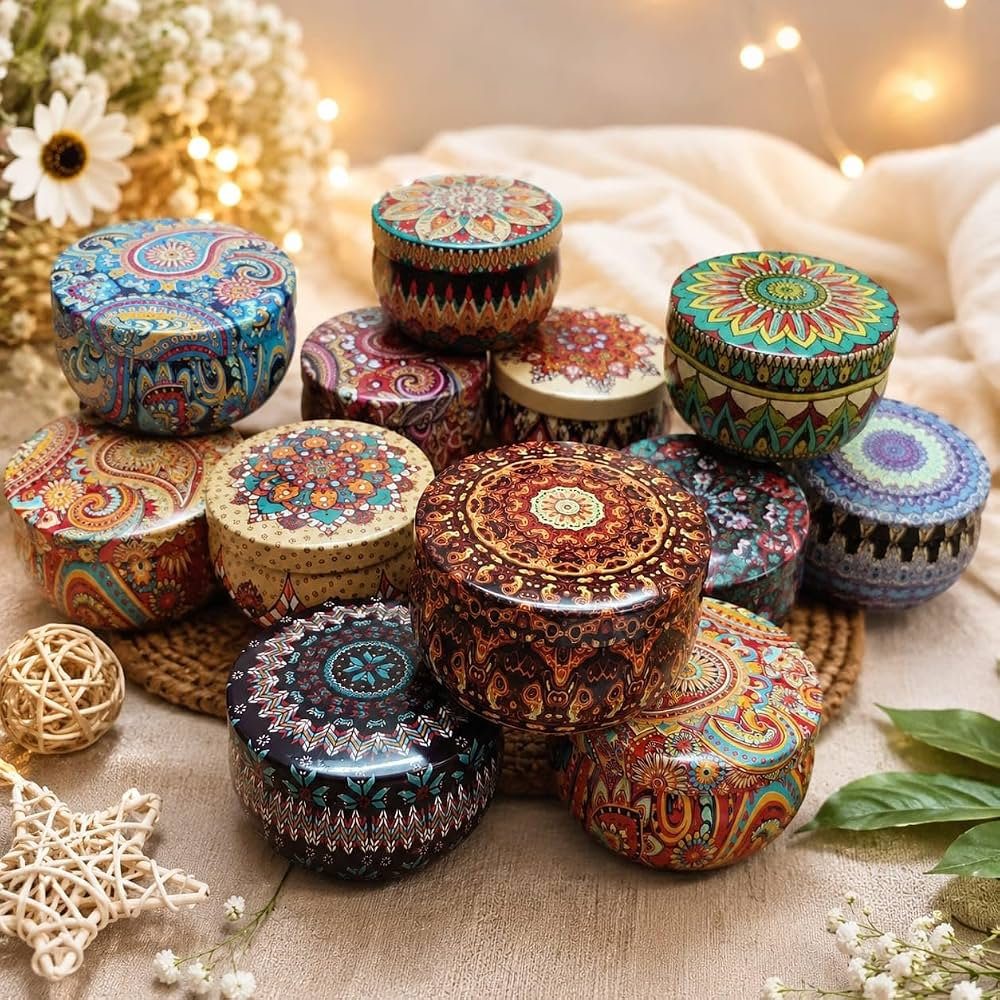
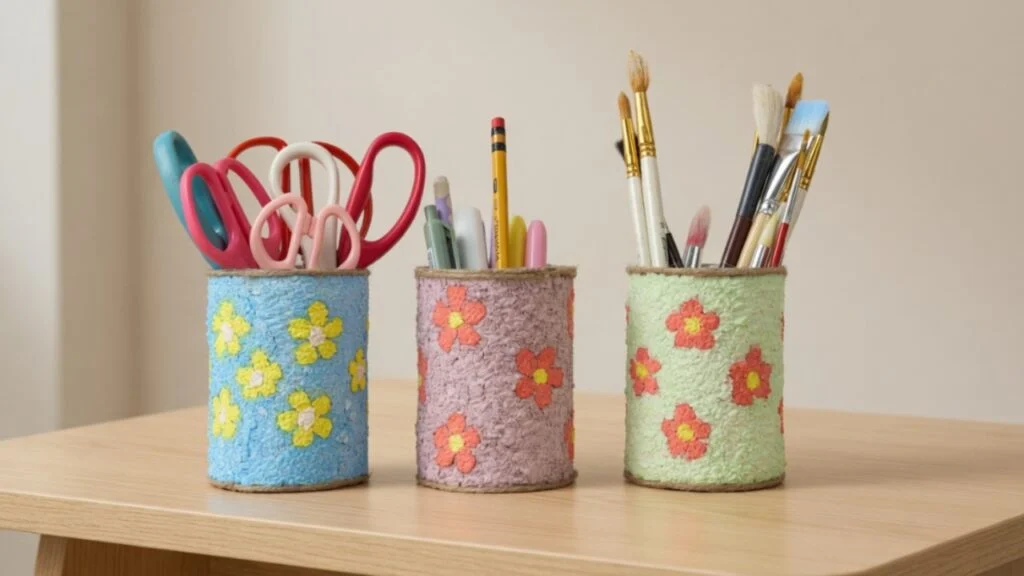

An empty food tin can be useful for storing pens, brushes or small craft materials.
There is one important thing to check first: the edges.
If there is any sharp metal, don’t use the tin until the edge has been made safe. Wash the tin properly as well.
Once it is ready, cover the outside with paper, paint, fabric or decorative tape.
You don’t have to make it complicated. Even a plain painted tin can look nice sitting on a desk.
This is one of those projects where the useful part matters more than the decoration.
7. Give a Plain Plant Pot Some Colour
A plain plant pot gives you a nice surface to experiment with painting.
If you aren’t confident with drawing, don’t start with a complicated picture.
Try dots.
Try lines.
Try small leaves or tiny flowers.
Simple patterns are much easier to control, and you can always add more details later.
Before painting, clean the outside of the pot and let it dry. If you have an idea in mind, lightly sketch it first.
And if one line comes out crooked, leave it. You don’t need to start the whole thing again because one little line isn’t perfect.
That slightly handmade look is part of the charm.
8. Try Making a DIY Small Gift Box

A handmade gift box can be useful when you have a small present to give someone.
For your first attempt, I would keep the shape basic. A square or rectangular box is enough.
Use thick paper or lightweight cardboard and measure carefully before cutting.
The folding needs a little attention. If one section is even slightly off, the box may not close properly.
Once it is assembled, add a ribbon, sticker or handwritten note.
The first box may not look exactly like the one in the tutorial. That’s fine. Once you understand where the folds go, the second attempt usually feels much easier.
9. Make a Place for Your Charging Cables
This is a very ordinary DIY project, but it solves an ordinary problem.
Charging cables get mixed together easily, especially if several people use the same table.
You can make a small holder using cardboard, clips or another material that keeps the cables separated.
The goal isn’t to make something beautiful. It is simply to stop the cables from becoming one tangled pile.
If you have chargers that look similar, add little labels. That small step can save you from picking up the wrong cable every time.
10. Make a DIY Greeting Card Yourself
A handmade card can be much simpler than people sometimes make it.
Fold a thick sheet of paper in half and start with the front.
You could add a few paper flowers, a drawing, stickers, coloured shapes or just a handwritten word.
Then write your message inside.
I think the message matters more than filling every empty space with decoration. Even a plain card can feel special when the message is written specifically for the person receiving it.
You can make cards for birthdays, festivals, thank-you messages or just because you want to give someone something small.
11. Make Simple DIY Decorations From Paper

Paper is probably one of the easiest materials to practise with.
You can fold it, cut it, layer it or roll it into different shapes.
Try making flowers, butterflies, stars or hanging decorations.
If you find a tutorial you like, don’t immediately make twenty pieces. Make one first.
You might discover that the shape takes longer than you expected. Or perhaps the colours don’t look as good together as they did in your head.
Old magazines are useful here too. A page with an interesting pattern or colour can become part of a collage instead of being thrown away.
Look Around Your House Before Buying Supplies
This is something I would make a habit of.
Before buying craft supplies, check what you already have.
There might be a cardboard box in a cupboard, an empty jar in the kitchen, leftover wrapping paper, old newspapers or ribbon from an earlier gift.
You may not have everything the tutorial lists, but that doesn’t mean the project cannot be done. Sometimes you can replace one material with something similar.
I would also read the entire tutorial before starting.
There is nothing worse than getting halfway through something and realising that you should have measured or cut another piece before gluing the first one.
Keep your table reasonably clear as well. When everything is spread everywhere, it becomes harder to find the one thing you actually need.
If you’re painting, put old newspaper underneath. It saves a lot of cleaning later.
The Small DIY Kit I Would Keep

I don’t think beginners need a cupboard full of craft supplies.
A small box can hold most of the basics:
- Scissors
- Glue
- Double-sided tape
- Cardboard
- Coloured paper
- Pencil
- Ruler
- Markers
- Basic paints
- Small paintbrushes
- Ribbon
- Thread
- Stickers
- Old magazines
- Newspaper
That’s enough to start experimenting.
Whenever you finish a project, keep the useful leftover materials in the same box. After some time, you will have a little collection without even realising it.
Just don’t turn your room into a storage area for every piece of packaging you find. Keep the things that are clean, useful and easy to store.
What Usually Goes Wrong at the Beginning?
Quite a few things.
You may cut the cardboard a little too small. You may use too much glue. The paper might tear when you are folding it. Or the paint may need another coat because the first one looks patchy.
I don’t think any of these are reasons to give up.
When you watch someone else make a project, you are watching the finished process. You don’t see all the attempts they made before getting comfortable with it.
Your first project is going to teach you things that a tutorial cannot.
You will start noticing how much pressure to use when cutting. You’ll understand which paper is easier to fold. You’ll learn that some paints need more time to dry.
Those little lessons stay with you.
If I Were Starting DIY Today
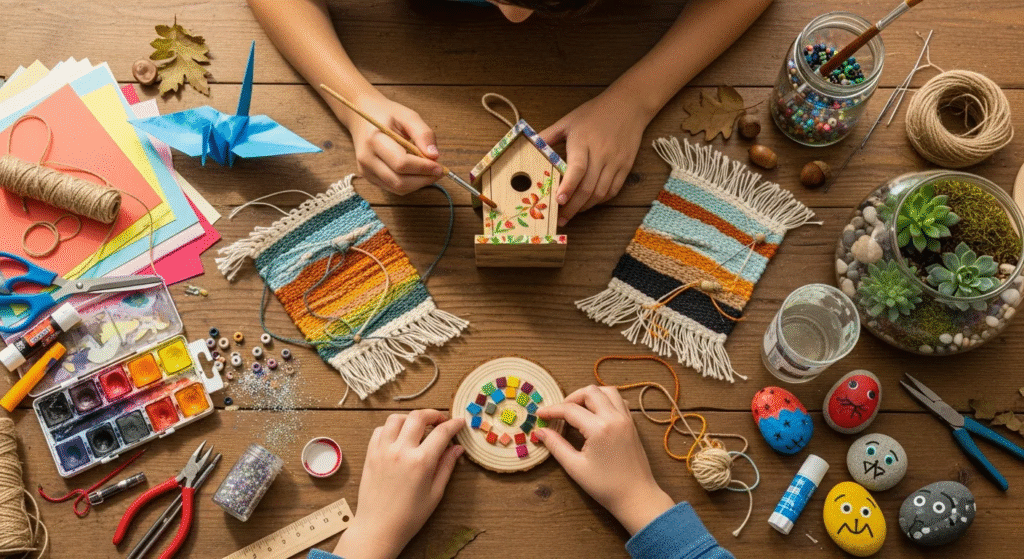
I wouldn’t save twenty tutorials and try to make all of them.
I’d choose one.
If I had an empty jar, I’d probably decorate that first. If there was some sturdy cardboard around, I’d make a photo frame. If I had colourful paper, I’d start with a bookmark or small wall decoration.
Then I’d gather the materials and clear one part of the table.
That’s it.
I wouldn’t worry about whether it was going to look amazing before I even started. I’d make the first attempt, see what went wrong, and decide what I would change next time.
Once you have done that a few times, you stop depending completely on tutorials. You start looking at things around you and thinking of your own ideas.
That, to me, is when DIY gets genuinely interesting.
Final Thoughts
You don’t need to be naturally artistic to start making things yourself.
You don’t need a cupboard full of supplies either.
A piece of cardboard, an empty jar, some paper and a little patience can be enough for your first project.
And yes, the first attempt may be slightly messy. The photo frame might not be perfectly straight. The paint on the plant pot may not be even. The gift box might need a second try.
None of that means the project was a failure.
You made something with your own hands, figured out what worked and noticed what you would do differently next time.
Before buying new supplies, have a look around your home. You may already have more useful materials than you think.
Choose one small project and give it a try. Don’t worry about making it Instagram-perfect. Once you get comfortable with the basics, you’ll probably start seeing DIY ideas in things you would normally throw away.
Frequently Asked Questions
1. What is a good DIY project for a beginner?
Start with something small, such as a bookmark, decorated jar, photo frame or greeting card. These projects don’t require complicated tools and give you a chance to practise basic craft skills.
2. Do I need to buy special materials for DIY?
Not necessarily. Check your home first. Cardboard boxes, empty jars, paper, old magazines, ribbons and other leftover materials can be useful for many projects.
3. What should I do if my first project doesn’t look right?
Don’t immediately throw it away. See if you can change something or use the piece in another way. Even a project that doesn’t turn out as planned can teach you what to do differently next time.
4. How can I make my DIY projects look cleaner?
Measure before cutting, use glue sparingly and give paint enough time to dry. It also helps to avoid adding too many decorations at once.
5. Can DIY help me reuse things at home?
Yes. Old boxes, jars, cardboard, paper and some packaging can often be turned into storage items, decorations or craft materials instead of being thrown away.