

Working and Best Communication with a team is not always as easy as it looks. When everyone is sitting in the same office, it is simple to turn around and ask a question. Things change when one person is working from home, another is in a different city, and someone else is busy with a client meeting.
A quick question can become five messages. A file gets buried in an old chat. Someone forgets about a deadline because it was mentioned during a meeting two weeks ago. These small problems can slowly make everyday work harder than it needs to be.
That is why Best Communication and collaboration software has become such a normal part of modern work. These tools give people a place to chat, share files, discuss projects, arrange meetings, and keep track of what is happening.
Of course, there is no need to install ten different apps just because they are available. The useful one is the tool that fits the way your team already works. A small group of writers might need a shared document and a simple chat app. A large company may need something much more organised.
Here are some popular Best Communication and collaboration tools and the kind of work they can help with.
1. Slack for Best Communication
Slack is mainly built for team Best Communication. The idea is fairly simple: instead of putting every discussion into one huge group chat, you can create separate channels for different topics.
A company could have a channel for the marketing team, another for customer support, and another for a particular project. That small change can make Best Communication much easier to follow.
Slack is also useful when people need to ask quick questions during the workday. Rather than sending an email for something Best Communication needs a short answer, a team member can simply send a message.
Files can be shared in Best Communication, and Slack can connect with other workplace applications. This means updates from other tools can sometimes appear in the team’s Best Communication space.
The biggest advantage is probably organisation. When channels are used properly, people have a better chance of finding an old Best Communication when they actually need it.
2. Microsoft Teams
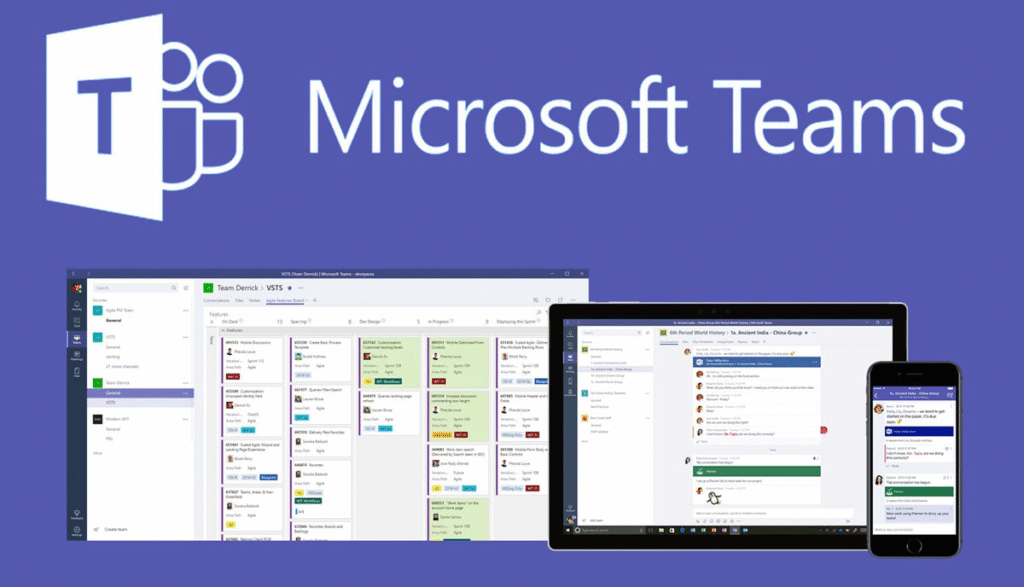
Microsoft Teams brings several workplace activities together. It supports chats, group Best Communication, online meetings, file sharing, and collaboration on Microsoft documents.
For organisations already using Microsoft 365, Teams can be a convenient choice because it works alongside applications such as Word, Excel, PowerPoint, and Outlook.
Imagine that a team is preparing a presentation for a client. Instead of sending different copies of the PowerPoint file to everyone, team members can work with a shared file and discuss changes through their usual Microsoft environment.
Teams can also be divided into different groups and channels, which is helpful when several departments or projects are operating at the same time.
It is especially suited to workplaces that already depend heavily on Microsoft products and want their Best Communication and document work to stay connected.
3. Zoom for Best Communication

Zoom is probably one of the first names people think of when they hear “online meeting.” It is designed around video Best Communication and can be used for team meetings, presentations, interviews, training, and conversations with clients.
Not every discussion needs a video call, but some do. Explaining a complicated issue over a long message thread can be frustrating for everyone. A short Best Communication may solve the problem much faster.
Screen sharing is another useful feature. A team member can show a presentation, demonstrate a software problem, or walk colleagues through a document while everyone is on the call.
There is one thing teams should be careful about, though: too many meetings. If employees spend most of their day jumping from one call to another, productivity can suffer. A meeting works best when there is a clear reason for having it.
4. Google Workspace
Google Workspace is useful for teams that spend a lot of time working with online documents.
It includes tools such as Google Docs, Google Sheets, Google Slides, Gmail, Google Drive, and Google Meet. Since these applications work together, a team can write, edit, share, and discuss files without constantly creating new versions.
Real-time editing is one of its most practical features. Two or more people can work on the same document and see changes while they happen.
This can make a big difference for content teams. A writer can prepare an article, an editor can make changes, and another person can check information without everyone having to email separate copies.
Google Drive also gives teams a shared place for files. With sensible folder organisation and access permissions, finding an old document becomes much less of a headache.
5. Microsoft 365
Microsoft 365 remains a familiar option for many offices. Applications such as Word, Excel, PowerPoint, Outlook, and OneDrive cover a large part of everyday business work.
For example, an employee might write a report in Word, analyse figures in Excel, prepare a presentation in PowerPoint, and use Outlook for email. Keeping these tools within one ecosystem can make the workflow easier to manage.
Cloud storage also means files can be accessed from different devices, depending on the organisation’s setup and permissions.
Microsoft 365 can be particularly useful for companies where employees already know the Microsoft Office applications. There is less of a learning curve because people are working with software they may have used for years.
6. Trello
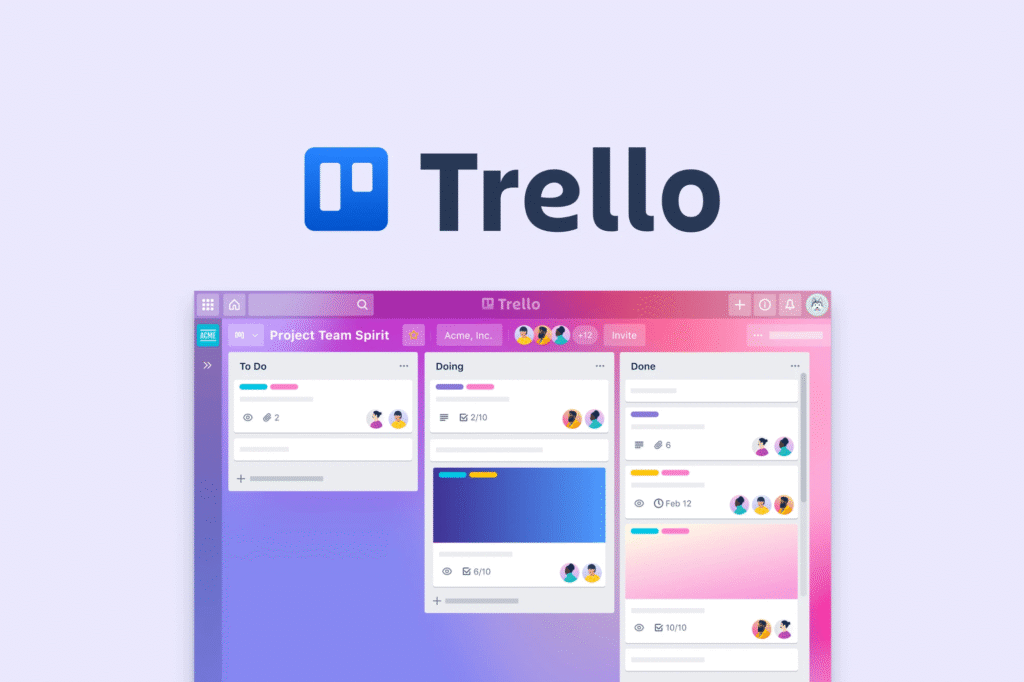
Trello is a good option for people who like seeing their work instead of reading through a long list of tasks.
Its boards use cards and lists to represent work. A basic project might have three columns: “To Do,” “In Progress,” and “Done.”
When someone starts a task, the card can be moved into the next column. It is a small visual change, but it makes the state of a project easy to understand.
Cards can include checklists, descriptions, comments, deadlines, and attachments. A team could use one board for a content calendar, for example, with separate cards for each article.
Trello is also fairly approachable for beginners. You do not have to understand complicated project-management systems just to create a simple board and start organising work.
7. Asana
Asana focuses more heavily on tasks and project management. It can be useful when a project has many individual jobs and several people are responsible for different parts.
A manager might create a project and break it into tasks such as research, writing, design, editing, and publishing. Each task can then be assigned to someone and given a deadline.
This gives team members a clearer idea of what they are expected to do.
Asana can be useful for marketing campaigns, product launches, content production, event planning, and other projects where deadlines matter.
Instead of asking in a group chat, “Who is working on this?” or “When is this due?”, the information can already be available in the project.
8. Notion
Notion is a little different from a simple Best Communication app. It can be used for notes, documents, databases, project planning, and storing information that a team may need repeatedly.
For example, a content team could create a workspace containing article ideas, writing guidelines, publishing schedules, meeting notes, and useful resources.
This can be handy when information keeps getting lost between emails and chat messages. Rather than explaining the same process to every new employee, a company can create a page explaining how the process works.
Notion is also flexible. Teams can build pages around their own needs instead of being forced into one particular layout.
The downside of that flexibility is that it can become messy if nobody takes responsibility for organising it. A simple workspace with clear pages is usually easier to use than one packed with random information.
9. ClickUp
ClickUp combines several project and task management features in one place. Teams can create tasks, assign them to people, add due dates, leave comments, and keep project information together.
It can be particularly useful for teams handling several stages of work.
Take a blog article as an example. One task could cover keyword research, another could be assigned to the writer, another to the editor, and another to the person responsible for publishing. Everyone can see where the article is in the process.
ClickUp also offers different ways of viewing tasks. Some people prefer lists, while others like a board-style layout.
The important thing is not to use every feature just because it exists. A team can start with the basics and add more structure when it actually becomes necessary.
10. Discord

Discord is best known for online communities, gaming groups, and casual conversations, but its Best Communication features can also work for certain teams.
It supports text channels, voice conversations, video calls, and file sharing. Different channels can be created for different topics, which keeps conversations from becoming one large stream.
For a formal business environment, Discord may not have everything an organisation expects from dedicated workplace software. But for informal groups, creative communities, student teams, or online projects, it can be useful.
The main lesson here is that popularity alone should not decide which tool a team uses. What works for a gaming community may not be suitable for an accounting department.
How to Choose the Right Collaboration Tool
Choosing collaboration software can become confusing because most platforms advertise a long list of features. Instead of comparing every single button, start with your team’s daily problems.
Think About Your Team Size
A five-person team probably does not need the same system as a company with hundreds of employees.
Small teams may be perfectly comfortable with a messaging platform and shared cloud storage. Larger organisations often need more detailed permissions, project spaces, administration tools, and security controls.
Decide What You Actually Need
Start by asking a simple question: what problem are we trying to solve?
If employees keep missing messages, better communication software might help. If tasks are being forgotten, project management may be more important. If people constantly send different versions of the same document, shared file editing could be the bigger priority.
The answer can make the choice much easier.
Check File Sharing
Most teams deal with files every day. Reports, images, spreadsheets, presentations, PDFs, and other documents all need to be stored somewhere.
Before choosing a platform, check how much storage is available, how files can be shared, and who can access them.
This becomes particularly important when documents contain private company or customer information.
Look at Integrations
Teams rarely use one application for everything.
A company might use one platform for Best Communication, another for accounting, another for project management, and another for customer relationships. If these tools can connect with each other, employees may spend less time copying information manually.
Even a small integration, such as receiving project notifications inside a Best Communication app, can save time.
Do Not Ignore Ease of Use
A tool can look impressive during a demonstration and still be frustrating in everyday use.
If employees cannot understand where to find messages, files, or tasks, they may avoid using the platform properly.
Before making a decision, consider how quickly an average team member can learn the basics. Sometimes a simpler platform is enough.
Pay Attention to Security
Workplace Best Communication can contain information that should not be available to everyone.
Before adopting any software, businesses should review its security features, access controls, account management options, and data policies.
Employees should also know what information is appropriate to share through workplace platforms.
Simple Ways to Improve Team Best Communication

Keep Topics in the Right Place for Best Communication
If every Best Communication happens in one general chat, finding information later becomes difficult. Separate channels or project spaces can make things much easier to follow.
Keep Messages Clear for Best Communication
A message does not need to be long to be useful. Say what you need, include the important details, and mention a deadline when there is one.
Make Responsibilities Obvious for Best Communication
When assigning a task, make it clear who is doing the work. “Someone should update the website” is vague. Naming the responsible person avoids confusion.
Write Down Important Decisions Best Communication
Meetings can move quickly, and people do not always remember every decision afterward. A short written summary can prevent misunderstandings.
Use Meetings Carefully for Best Communication
Some Best Communication are easier face-to-face or over video. Others can be handled with a two-line message.
Choosing the simplest method for the situation can save everyone’s time.
Final Thoughts
Best Communication tools are meant to make teamwork easier, not create another collection of passwords and notifications to manage.
Slack and Microsoft Teams can help teams stay connected through everyday conversations. Zoom is useful when a discussion works better as a video call. Google Workspace and Microsoft 365 bring documents, storage, and Best Communication into connected ecosystems. Trello, Asana, Notion, and ClickUp can help teams organise projects and keep track of tasks. Discord can also be useful for certain informal groups and online communities.
There is no need to choose a platform simply because another company is using it. A tool should fit the size of your team, the type of work you do, and the way people prefer to Best Communication.
Before making a final decision, try to identify the problems your team faces now. Are messages being missed? Are deadlines forgotten? Are files difficult to find? Are meetings taking up too much time?
Once you know the actual problem, finding the right software becomes much easier. And when everyone understands how to use the chosen tool, even everyday tasks like sharing a file, asking a question, or checking project progress can become noticeably simpler.