
Artificial intelligence and automation have moved far beyond being future concepts. In 2026, they are actively shaping industries, changing business operations, influencing consumer experiences, and transforming how people work and live. What once seemed like advanced technology reserved for large corporations has now become accessible to businesses of every size and even individuals looking to improve productivity.
The rapid development of AI and automation has created both excitement and uncertainty. Some people see endless opportunities while others worry about job changes, privacy concerns, and technological dependence. Understanding how these technologies work and how they influence everyday life has become increasingly important.
This guide explores the fundamentals of AI and automation, their applications, benefits, challenges, and what people should know to stay prepared in an increasingly automated world.
Understanding AI and Automation
Although many people use artificial intelligence and automation interchangeably, they are not exactly the same.
Artificial intelligence refers to systems designed to perform tasks that normally require human intelligence. These tasks include learning from data, recognizing patterns, understanding language, making predictions, and solving problems.
Automation focuses on reducing manual work by allowing systems or machines to perform repetitive processes automatically. Automation may or may not involve artificial intelligence.
When combined, AI and automation create systems capable of performing tasks more intelligently, efficiently, and independently.
For example, automation may schedule emails automatically, while AI can personalize those emails based on customer behavior.
Why AI and Automation Matter More in 2026
Several factors have accelerated the adoption of AI and automation.
Businesses are facing increasing pressure to improve efficiency while reducing costs. Customers expect faster services, personalized experiences, and immediate responses. At the same time, competition continues growing across industries.
AI and automation provide solutions by helping organizations process large amounts of information quickly, reduce repetitive tasks, and improve decision-making.
Advancements in computing power, cloud services, data availability, and machine learning technologies have also made implementation easier and more affordable.
As a result, organizations that previously considered these technologies too expensive are now adopting them at much faster rates.
How Businesses Are Using AI and Automation
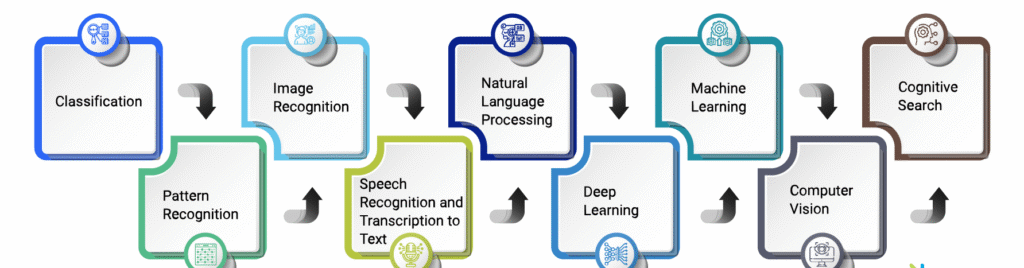
Businesses across industries are using AI and automation in multiple ways.
Customer service has changed dramatically through intelligent chat systems, automated support processes, and faster response systems. Companies can now provide assistance twenty-four hours a day without significantly increasing staffing costs.
Marketing teams use AI to analyze customer behavior, optimize advertising campaigns, generate content ideas, and improve personalization.
Manufacturing industries use automation to increase production speed, improve quality control, and reduce human errors.
Financial organizations apply AI to fraud detection, risk analysis, customer support, and investment predictions.
Healthcare providers increasingly use AI for diagnostics, administrative efficiency, patient monitoring, and research.
The expansion of use cases demonstrates that AI is no longer limited to technology companies.
The Growing Impact on Jobs and Careers
One of the biggest discussions surrounding AI and automation involves employment.
Some repetitive tasks are increasingly being automated, particularly in areas involving predictable processes and routine workflows. This naturally creates concerns about job displacement.
However, automation is also creating new opportunities.
Many organizations now require professionals who can manage AI systems, analyze data, develop automated workflows, and integrate technology into business operations.
Skills that involve creativity, communication, leadership, emotional intelligence, strategic thinking, and complex problem-solving remain highly valuable.
Rather than eliminating all jobs, AI is changing how work is performed.
People who continuously learn and adapt generally position themselves more effectively for changing job markets.
AI Tools Becoming Part of Everyday Life

Artificial intelligence is becoming increasingly integrated into daily activities.
People use AI-powered recommendations while shopping, streaming content, navigating traffic, and managing finances.
Voice assistants, language translation tools, image generators, writing assistants, and smart productivity applications have become common.
Automation also influences homes through smart devices that control lighting, security systems, appliances, and energy management.
Many users interact with AI multiple times daily without even realizing it.
As these systems become more advanced, their presence in everyday routines will likely continue expanding.
Benefits of AI and Automation
The popularity of AI and automation is largely driven by their advantages.
Efficiency improvements remain one of the biggest benefits. Machines can process large amounts of information faster than humans and perform repetitive tasks continuously.
Cost reduction also plays a significant role because organizations can reduce manual workloads and optimize operations.
Accuracy improvements help minimize errors in data processing, calculations, and repetitive activities.
Scalability allows businesses to handle growth without increasing resources proportionally.
Personalization enables organizations to deliver more relevant experiences by analyzing customer behavior and preferences.
These benefits explain why organizations continue investing heavily in AI-driven solutions.
Challenges and Concerns
Despite the advantages, AI and automation create important challenges.
Privacy concerns continue growing as organizations collect increasing amounts of personal information.
Bias within AI systems remains a significant issue because algorithms can sometimes reflect inaccuracies or unfair patterns found in training data.
Security risks become more important as organizations rely heavily on automated systems.
Overdependence on automation may create vulnerabilities when systems fail or produce incorrect results.
Ethical questions also remain unresolved regarding decision-making responsibilities, transparency, and accountability.
Addressing these challenges requires thoughtful implementation rather than simply adopting technology because it is available.
The Importance of Human Skills in an Automated World
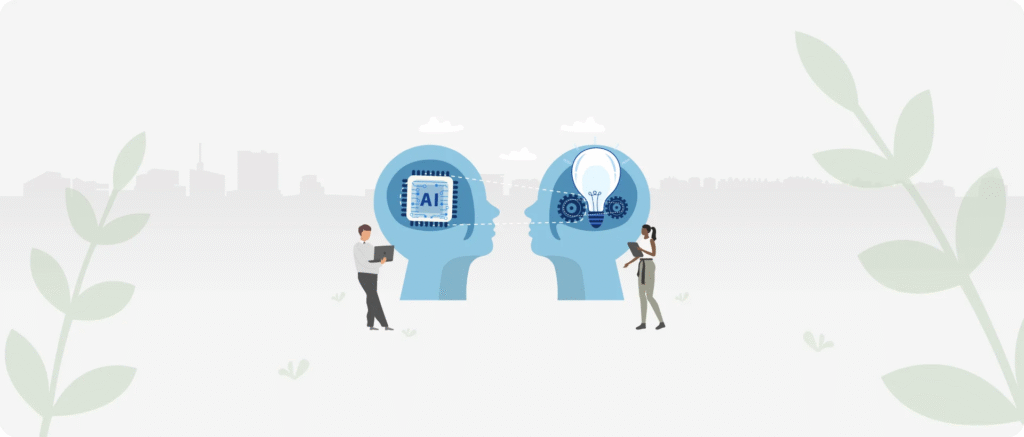
As technology advances, human abilities become even more important.
Creativity allows people to generate original ideas that machines often struggle to replicate.
Critical thinking helps evaluate information, solve unexpected problems, and make balanced decisions.
Communication skills remain essential because businesses still depend heavily on collaboration and relationship building.
Leadership becomes increasingly valuable when organizations navigate technological changes.
Emotional intelligence also matters because human interactions remain central in healthcare, education, customer service, and management.
People who combine technical knowledge with strong human skills often create the greatest long-term value.
Preparing for an AI-Driven Future
Preparing for the future does not necessarily require becoming a software engineer or AI researcher.
Learning basic technology concepts can improve confidence and adaptability.
Understanding data literacy, digital tools, workflow optimization, and automation platforms can create valuable opportunities.
Continuous learning has become increasingly important because technology changes quickly.
Individuals who remain curious and flexible generally adapt more successfully than those who resist change entirely.
Experimenting with AI tools, understanding their capabilities, and learning where they provide value can help people stay competitive.
Preparation is often less about mastering every new technology and more about maintaining the ability to learn continuously.
What the Future May Look Like
AI and automation will likely continue expanding into new industries and applications.
Organizations may increasingly combine human workers with intelligent systems rather than replacing humans entirely.
Personalized experiences may become even more advanced through better predictive systems.
Automated decision-making could influence more areas including transportation, healthcare, education, and financial services.
At the same time, regulations, ethical frameworks, and public discussions will likely become more important.
The future will probably involve balancing technological advancement with responsible implementation.
Conclusion
AI and automation are no longer emerging technologies waiting to arrive. They are already influencing businesses, careers, industries, and daily life in significant ways.
Understanding these technologies is becoming increasingly important because their impact will continue expanding throughout the coming years.
While challenges remain, AI and automation also create opportunities for greater efficiency, innovation, and growth.
Success in 2026 and beyond will not depend solely on technology itself but on how effectively people learn to work alongside it.
The individuals and organizations that adapt, learn continuously, and embrace responsible use of technology will likely benefit the most from this rapidly evolving landscape.
FAQ’s

How to Get a Personal Loan in India
few years ago, I found myself in a position where I needed a significant amount…

Profitable Business Ideas for Students to Earn Money in 2026
I still remember sitting on my twin-sized college bed during my second semester, opening my…

How to Invest in Fixed Deposits in 2026
When I first started earning and saving money, the investment world felt completely overwhelming to…

The Best Stock Market Investment Tips for Beginners in 2026
When I first stepped into the stock market back in 2021, I was convinced I’d…

The Best Apps for Exam Preparation in India
When I first started preparing for competitive exams in India, my study table was a…

How to Start an E-commerce Business in India in 2026
When I took the plunge into online selling in India back in early 2024, my…