
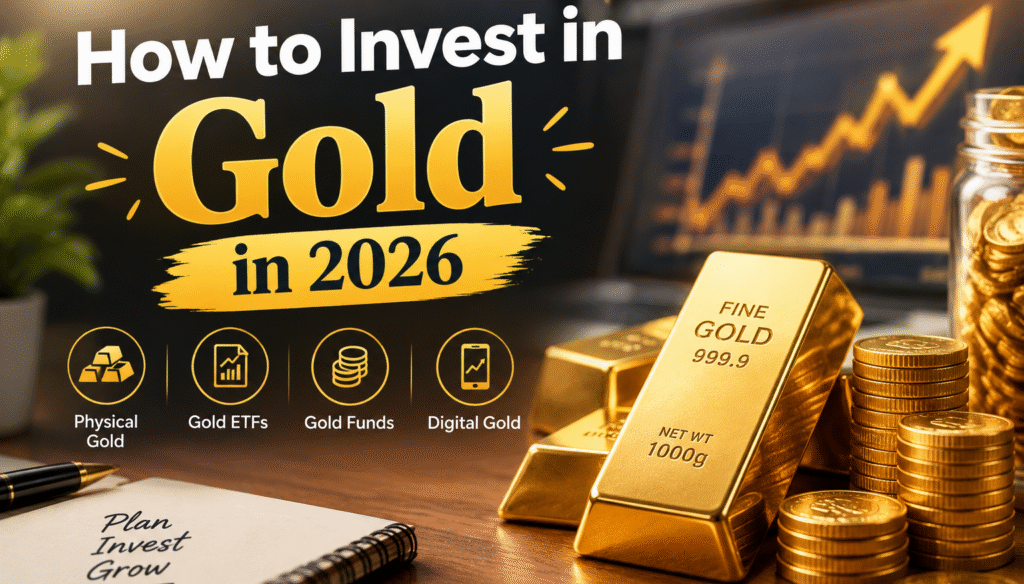
I’ve always Invest in Gold a little different from other investments.
People don’t usually talk about it the same way they talk about stocks or mutual funds. For many Indian families, gold is something we grow up seeing at home. There may be jewellery in a locker, coins bought for a special occasion, or someone in the family who keeps saying, “Gold is always useful.”
But when I started looking at gold as an investment instead of just a purchase, I realized there are quite a few things to understand.
You don’t necessarily have to buy jewellery.
You don’t even have to keep physical gold at home.
There are Gold ETFs, gold mutual funds, Sovereign Gold Bonds that already exist in the market, and digital-gold products too. The important part is knowing what you’re actually buying and what kind of risk comes with it.
And that’s the approach I would take in 2026.
I wouldn’t buy gold simply because the price is moving up or because everyone around me is talking about it. I’d first decide why I want Invest in Gold in my portfolio, how much I can comfortably put into it, and which form makes the most sense for me.
Why Would I Invest in Gold?

For me, gold makes more sense as a diversification tool than as the entire investment plan.
I wouldn’t put all my savings into Invest in Gold.
The idea is more like having some money in an asset that behaves differently from the rest of my portfolio.
Gold can also be useful for people who simply want exposure to the price of gold without buying and storing jewellery or coins.
But there is one thing I keep reminding myself:
Gold is not a magic investment.
Its price can rise and fall. There is no guaranteed return. And just because gold performed well during one period doesn’t mean I should expect the same thing every year.
That’s why I would think about the role of Invest in Gold first and the product second.
How Can You Invest in Gold in 2026?
There are several ways to get exposure to Invest in Gold in India.
The main options I would look at are:
- Physical gold
- Gold ETFs
- Gold mutual funds
- Sovereign Gold Bonds already issued by the government
- Digital gold
They may all be linked to Invest in Gold in some way, but they are not the same thing.
That’s where beginners can easily get confused.
1. Physical Gold

This is still the most familiar option.
You can buy jewellery, Invest in Gold coins or bars from a jeweller.
I’ve always liked the fact that physical gold is something I can actually hold. There is no app involved and no need to think about whether the investment exists inside a demat account.
But when I think about investment, jewellery is not my first choice.
The reason is simple.
With jewellery, I’m not paying only for the Invest in Gold. There can also be making charges, taxes and other costs. When I eventually sell it, the amount I receive may not simply equal whatever the current gold rate says.
So if my main goal is Invest in Gold rather than wearing the jewellery, I’d look at other forms first.
When Would I Consider Physical Gold?
I would consider coins or bars when I actually want physical ownership.
I might also buy jewellery for personal or family reasons and treat its investment value as secondary.
I wouldn’t buy expensive jewellery and convince myself that the entire purchase is an investment.
To me, those are two different decisions.
2. Gold ETFs

This is one option I would seriously consider if I wanted gold exposure without storing physical gold.
Gold ETFs are traded on stock exchanges, and their price is linked to the price of gold. AMFI explains that Gold ETF units provide an electronic way to hold gold, with liquidity and no physical-storage or theft concerns. (AMFI)
The practical part I like is that I don’t have to worry about a locker.
I also don’t have to decide where to store coins or bars.
Instead, I can buy and sell the ETF through the market, subject to the normal market process.
Of course, there are costs involved, including the fund’s expenses and brokerage or other transaction charges depending on how I invest.
So I would still compare the ETF before buying rather than assuming all Gold ETFs are identical.
3. Gold Mutual Funds
Another option is a Invest in Gold mutual fund, often structured as a fund of fund that invests in Gold ETFs.
This can feel easier for someone who is already comfortable investing through a mutual-fund platform.
I like this route when I want something familiar and don’t necessarily want to manage exchange orders myself.
But I’d still check the fund’s expense ratio, how it gets exposure to gold, and what the actual investment structure looks like.
I’ve learned that the word “gold” in the product name doesn’t tell me enough.
I want to know what is sitting underneath it.
4. Sovereign Gold Bonds
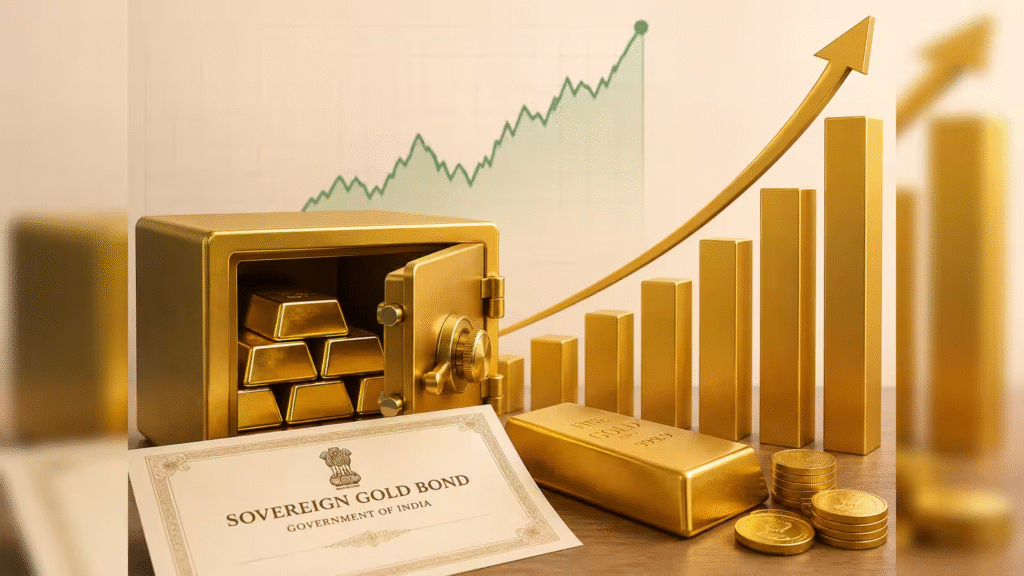
Sovereign Gold Bonds, or SGBs, are a little different because they are government securities linked to the price of gold.
They are denominated in grams of gold rather than rupees. RBI’s information explains that SGBs were designed as a substitute for holding physical gold and have a minimum denomination of 1 gram. (RBI)
There is an important 2026 point here, though.
I would not assume that a new Sovereign Gold Bond issue is available just because SGBs still exist. The RBI’s official SGB site currently shows the historical issue notifications and ongoing redemption information for older series, including multiple redemptions during 2026. (RBI SGB)
So if I were interested in SGBs today, I’d first check whether there is a fresh government issue or whether I’m looking at an existing bond in the secondary market.
That distinction matters.
I also wouldn’t buy an old SGB just because someone tells me, “SGB is always better than Gold ETF.”
The purchase price, maturity, liquidity and tax position all need to be considered.
What I Like About SGBs
The structure is attractive because it gives exposure to gold without physically owning the metal.
For eligible SGBs bought at original issue and held continuously until maturity, the tax treatment has also received a specific 2026 amendment. The Finance Bill provides that the exemption at redemption applies to an individual who subscribed at original issue and holds continuously until maturity, effective from 1 April 2026. (Income Tax Department)
That sounds useful, but I would still read the exact terms before investing.
Tax rules and bond conditions can matter a lot.
5. Digital Gold
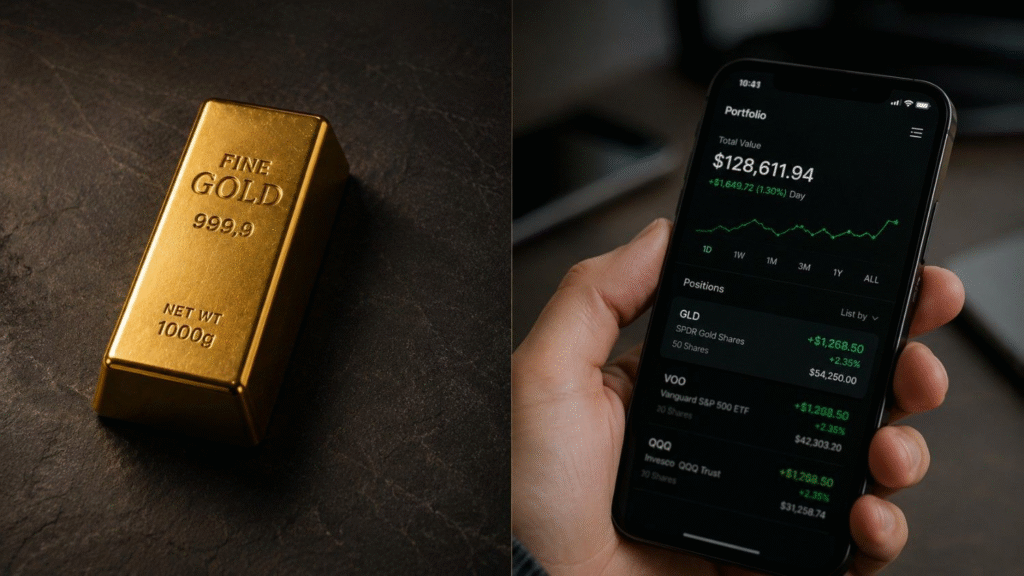
This is probably where I’d be the most careful as a beginner.
Digital gold is easy to buy through various apps and online platforms, and I understand why people find it convenient.
But there is an important regulatory point that shouldn’t be ignored.
In November 2025, SEBI issued a public caution saying that digital-gold products offered by online platforms are different from SEBI-regulated gold products. SEBI said these digital-gold products are outside its regulatory framework and may expose investors to counterparty and operational risks, with no securities-market investor-protection mechanisms applying to them. (SEBI)
That makes me much more cautious about treating “digital gold” as automatically equivalent to a Gold ETF.
They are not the same thing.
So if I were choosing between the two for investment purposes, I’d want to understand exactly what protection and regulation applies before putting money in.
Gold ETF vs Physical Gold vs Digital Gold
When I first looked at all these options, this was the easiest way for me to understand them.
| Option | What I Like | What I Would Watch |
|---|---|---|
| Physical Gold | I actually own the gold | Storage, purity, making charges, resale |
| Gold ETF | Easy market access, no physical storage | Market price, fund expenses, brokerage |
| Gold Mutual Fund | Familiar mutual-fund route | Fund structure and expenses |
| Sovereign Gold Bond | Government-security structure and gold-linked value | Availability, liquidity, maturity and tax rules |
| Digital Gold | Very easy to buy online | Regulatory status and counterparty risk |
For a beginner, I think this table makes one thing clear.
There isn’t one “best” form of gold for everyone.
It depends on what I’m actually trying to do.
How Much of My Money Should Be in Invest in Gold?
This is where I think people get too specific.
You’ll often see a fixed number quoted as if everyone should invest exactly that percentage.
I don’t think personal finance works that neatly.
If I already have emergency savings, insurance, equity investments, debt obligations and other goals, my situation is going to be different from someone else’s.
So I wouldn’t decide:
“I need exactly 10% Invest in Gold.”
I’d first look at my existing portfolio.
If I already have a lot of gold through jewellery or another investment, I may not need to add much more.
If I have zero exposure and want some diversification, I can consider adding a modest amount.
The important part is not letting gold become so large a part of my portfolio that one asset starts controlling my financial future.
Should Beginners Invest in Gold Every Month?
They can, but I wouldn’t call it compulsory.
A monthly approach can make Invest in Gold feel more manageable because I’m not trying to predict the perfect day to buy.
For example, instead of waiting for the “perfect gold price,” I could invest a fixed amount regularly through a suitable regulated product.
I like this approach because predicting short-term gold prices is not something I’d want to build my entire strategy around.
The goal is consistency, not guessing every price movement correctly.
Is Gold a Invest in Gold for 2026?


I think the better question is:
Good for what?
If my goal is diversification,Invest in Gold can have a place.
If my goal is guaranteed income, gold isn’t the first thing I’d look at.
If my goal is long-term wealth creation, I’d compare gold with other asset classes rather than assuming it should be the main investment.
And if my goal is to buy jewellery for a wedding or family occasion, that’s a different decision entirely.
I don’t think “Invest in Gold is good” or “Invest in Gold is bad” is a useful way to think about it.
The role it plays in my overall financial plan matters much more.
What About Gold Jewellery as an Invest in Gold?
This is one topic I would separate from everything else.
Jewellery can absolutely have financial value.
But I wouldn’t treat a jewellery purchase the same way I’d treat a Invest in Gold ETF.
When I buy jewellery, I may be paying for design, craftsmanship and making charges as well as the underlying gold.
That means the amount I spend and the value of the gold itself aren’t necessarily the same thing.
So if I’m buying jewellery because I genuinely want to wear it, I’m fine with that.
I’d just stop calling the entire purchase an “Invest in Gold.”
That makes the decision much clearer.
Common Mistakes in Invest in Gold I Would Avoid

There are a few Invest in Gold mistakes I’d try hard not to make.
Buying Only Because the Price Is Rising
A rising price can create a lot of excitement.
It doesn’t tell me what will happen next.
I’d rather decide my allocation first and stick to it than keep increasing my Invest in Gold every time gold gets more expensive.
Putting All My Savings Into Gold
I would never do this.
Gold can be one piece of a portfolio.
It shouldn’t become the whole portfolio simply because it feels safe.
Ignoring Costs
The return I see on the gold price is not necessarily the same as the return I make after all costs.
That difference matters.
Buying Digital Gold Without Checking the Structure
This is particularly important now because SEBI has explicitly warned that digital-gold products offered by online platforms are outside its securities-market regulatory framework. (SEBI)
Easy to buy does not automatically mean well protected.
Chasing the “Perfect” Price
I don’t think I can reliably predict the exact point where gold will be cheapest.
Trying to do that can keep me waiting forever.
A planned, sensible approach is easier.
Gold Investment Taxes: What Beginners Should Know
This is one section I’d always double-check before making a decision because tax rules can change.
Gold-related gains can fall under capital-gains taxation, but the treatment depends on the specific product and transaction.
For example, a Invest in Gold ETF is treated as a specified mutual fund for capital-gains taxation purposes according to AMFI’s investor information. (AMFI)
The wider tax framework also changed with the move to the Income Tax Act, 2025 for Tax Year 2026–27 onward. (Income Tax Department)
For me, the practical lesson is simple:
Don’t calculate your expected return from the gold price alone.
I would also consider taxes, fees and other transaction costs before deciding whether an Invest in Gold is actually attractive.
A Simple Invest in Gold Approach I Would Use

If I were starting from zero in 2026, I would keep things fairly boring.
First, I’d make sure my emergency savings were in place.
Then I’d look at my existing Invest in Gold and see whether I already had exposure to gold through jewellery or financial products.
After that, I’d decide whether I actually wanted gold as part of my diversification strategy.
If I did, I’d compare regulated options such as Invest in Gold ETFs or suitable gold mutual-fund structures.
I would also check whether any current SGB issue was available rather than assuming I could simply buy a fresh one whenever I wanted.
And I would stay cautious about digital gold because of SEBI’s warning about its regulatory status. (SEBI)
I wouldn’t rush.
I wouldn’t borrow money to Invest in Gold.
And I definitely wouldn’t put my entire savings into it.
Frequently Asked Questions 🤔

How to Get a Personal Loan in India
few years ago, I found myself in a position where I needed a significant amount…

Profitable Business Ideas for Students to Earn Money in 2026
I still remember sitting on my twin-sized college bed during my second semester, opening my…
How to Invest in Fixed Deposits in 2026
When I first started earning and saving money, the investment world felt completely overwhelming to…
The Best Stock Market Investment Tips for Beginners in 2026
When I first stepped into the stock market back in 2021, I was convinced I’d…
The Best Apps for Exam Preparation in India
When I first started preparing for competitive exams in India, my study table was a…

How to Start an E-commerce Business in India in 2026
When I took the plunge into online selling in India back in early 2024, my…