
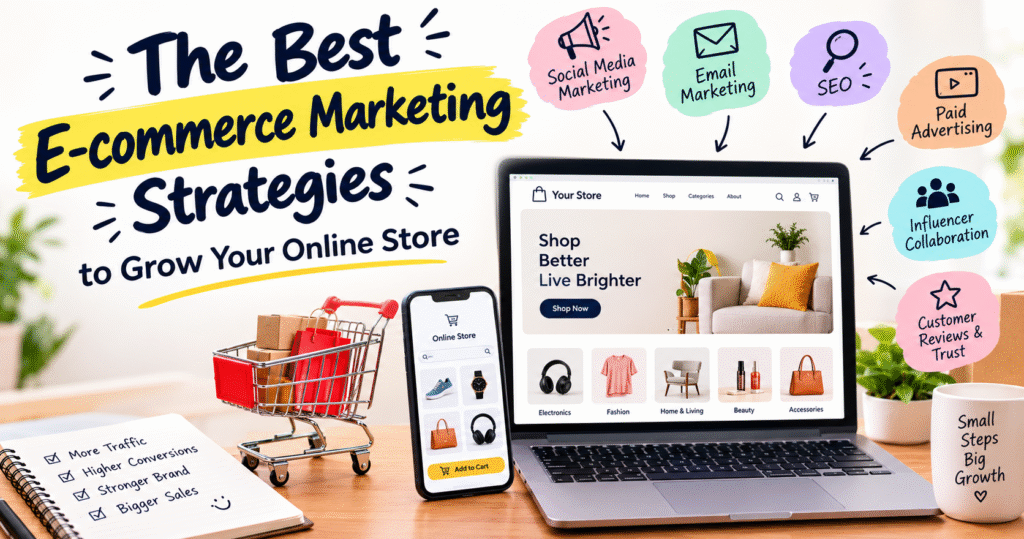
When I first started paying attention to e-commerce marketing, I thought getting people to visit an online store was the hardest part.
It turns out, that’s only half the problem.
You can get visitors from Instagram, Google, Facebook, ads, or almost anywhere else, but that doesn’t automatically mean they will buy something. I’ve seen how quickly people leave a store when the product page feels confusing, the photos don’t look trustworthy, or they simply can’t find the information they need.
That changed the way I think about e-commerce marketing.
For me, good marketing is not just about getting more traffic. It’s about bringing the right people to the store, giving them a reason to stay, and making the buying process feel easy.
Over time, I’ve found a few strategies much more useful than simply posting promotional content every day.
1. Start With a Product Page That Actually Helps People

One mistake I see quite often is spending a lot of time promoting a product and very little time improving the product page.
I don’t think that makes sense.
When someone lands on a product page, they usually want quick answers.
What is this?
How does it work?
What does it look like?
Will it suit me?
How much does it cost?
How long will delivery take?
What happens if I don’t like it?
I’ve learned that a product page needs to answer those questions without making the customer search around for them.
I pay attention to the product photos first. Clear images make a huge difference. I also prefer descriptions that explain the product in normal language rather than stuffing the page with complicated marketing words.
Instead of saying a product is “revolutionary and premium,” I’d rather explain what it actually does and why someone might find it useful.
That feels much more believable.
2. Make Your Store Easy to Use on a Phone

A lot of online shopping happens on mobile devices, so I always check my store on my phone before assuming everything looks fine.
Sometimes a website can look perfect on a laptop and feel completely different on a smaller screen.
Buttons may be difficult to tap. Product images may take too long to load. Text may look too crowded. The checkout process can feel longer than expected.
These little problems don’t always look serious when you’re the person managing the store.
For a customer, though, they can be enough to close the tab.
I try to keep the mobile experience simple. Important information should be easy to see, product images should load properly, and the path from product page to checkout should feel straightforward.
3. Use Social Media to Show the Product, Not Just Sell It
I used to think every e-commerce social media post needed to include a direct sales message.
Now I don’t feel that way.
People don’t open Instagram or watch videos because they are waiting for another “Buy Now” post.
I get much better ideas from content that shows the product in use.
For example, instead of only posting a picture of a product, I might show how it is used, what problem it solves, how it looks in real life, or what makes it different from similar products.
Behind-the-scenes content can also work well.
Packing orders, preparing products, answering customer questions, or showing how something is made can make an online business feel more real.
That matters because customers can’t physically see an online store the way they can walk into a local shop.
Content helps fill that gap.
4. Don’t Ignore Search Engine Optimization

SEO is one of those things that I find easy to overlook when I’m focused on getting quick results.
But it can become very valuable over time.
When someone searches for a product or a solution on Google, I want my store to have a chance of appearing in front of them.
That means I don’t just think about product names. I also think about the words customers actually use when searching.
For example, a customer may not search for the exact product name used by a brand. They might search for something like “best laptop bag for college students” or “comfortable shoes for daily walking.”
Those search phrases can give me ideas for product pages, category pages, blog posts, and buying guides.
I also make sure product titles, descriptions, headings, image alt text, and page content are written clearly.
I don’t try to force keywords into every sentence.
That usually makes the writing worse.
5. Use Customer Reviews as Part of Your Marketing
Reviews are one of the things I look for before buying something online, and I know I’m not the only person who does that.
When a customer hasn’t heard of a store before, a few genuine reviews can make the business feel much more trustworthy.
That’s why I don’t treat reviews as something that belongs only at the bottom of a website.
They can be used in different parts of the marketing.
A review can appear on a product page. It can become part of a social media post. A customer photo can be used in a product story. A short testimonial can be included in an email.
The important thing is that the feedback should be genuine.
I wouldn’t make up reviews just to make a product look popular. In the long run, fake trust is still fake trust.
6. Give Email Marketing a Proper Chance
Email marketing may not feel as exciting as social media, but I think it is one of the more useful channels for an online store.
Someone who has already visited my store, joined the email list, or bought something has shown some level of interest.
That makes the relationship very different from advertising to a completely new person.
I like using emails for things such as:
- New product launches
- Helpful product information
- Special offers
- Restock updates
- Seasonal promotions
- Customer follow-ups
I also think it’s important not to send an email every time there is something to sell.
If every email says “Buy now,” people eventually stop paying attention.
Sometimes useful information is enough to keep the relationship going.
7. Follow Up With People Who Left Without Buying
This is one area I think many store owners overlook.
Someone can visit a product page, add something to the cart, and disappear.
That doesn’t always mean they were not interested.
Maybe they got distracted. Maybe they wanted to compare prices. Maybe they needed time to think.
This is where abandoned-cart emails or messages can be useful.
I don’t think the message needs to be pushy.
A simple reminder can be enough.
Depending on the store and customer, a follow-up might remind them that the item is still available, answer a common question, or offer help if they were unsure about something.
The goal is not to chase people endlessly.
It’s simply to give interested customers another opportunity to complete what they already started.
8. Use Paid Ads Carefully
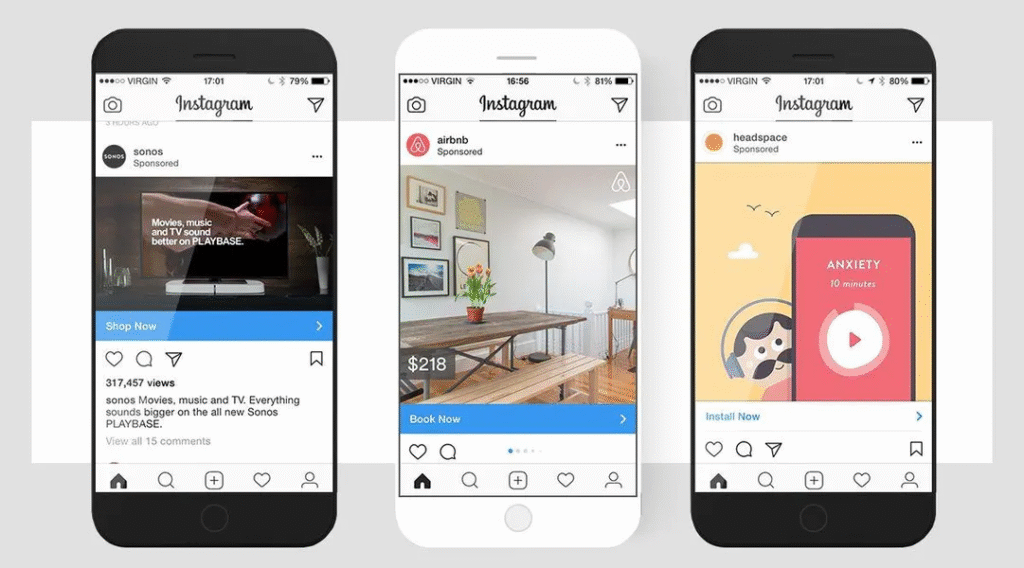
Paid advertising can bring traffic quickly, but I don’t think turning on ads is a marketing strategy by itself.
I’ve learned that the ad is only one part of the process.
The product needs to be right.
The landing page needs to make sense.
The price needs to be competitive.
The checkout needs to work.
And the audience needs to actually care about what I’m selling.
Otherwise, I could spend money bringing people to the store only to watch them leave again.
When testing ads, I prefer starting with a manageable budget and learning from the results instead of putting a large amount of money into one campaign immediately.
I pay attention to which products get attention, which audiences respond, and where people drop off.
That information is often more useful than simply looking at how many people clicked an ad.
9. Retarget Visitors Who Already Know Your Store
Retargeting is another strategy I find useful because it focuses on people who have already interacted with the store.
Someone who visited a product page is different from someone who has never heard of the business.
They may only need another reminder.
Retargeting can help show relevant products or messages to previous visitors through advertising platforms.
I still think this needs to be handled carefully.
Seeing the same product ad over and over can become annoying very quickly.
The better approach, in my opinion, is to keep the message relevant and avoid bombarding people.
10. Create Helpful Content Marketing Around Your Products

One thing I’ve noticed is that not every potential customer is ready to buy immediately.
Sometimes they’re still researching.
They’re comparing options, looking for ideas, trying to understand which product is right for them, or simply learning more about a problem.
That’s where content marketing can help.
For an online store, this could mean:
- Buying guides
- Product comparisons
- How-to articles
- FAQs
- Tutorials
- Short videos
- Product care tips
For example, if I sell skincare products, I wouldn’t only write about my own products.
I could also create content around choosing products for different skin types, common skincare mistakes, or how to build a simple routine.
That kind of content can attract people before they are ready to purchase.
And when they are finally ready, my store may already be familiar to them.
11. Make Your Marketing Checkout as Simple as Possible
This is probably one of the less exciting parts of e-commerce marketing, but it matters.
Imagine doing all the work to bring someone to the store, convincing them to choose a product, and then losing them because checkout is confusing.
I try to look at checkout from the customer’s point of view.
Are the delivery charges clear?
Are the payment options easy to understand?
Do I really need to fill out all those fields?
Is there anything that suddenly makes the order look much more expensive?
The fewer unnecessary obstacles there are, the better.
Customers should not have to work hard to give me their money.
12. Focus on Existing Customers Too

Getting a new customer is important, but I don’t think marketing should stop after the first purchase.
A previous customer already knows the store, which can make future purchases easier.
Depending on what I’m selling, I might share new arrivals, related products, useful tips, or offers that actually make sense for them.
I also think customer service becomes part of marketing at this stage.
A person may forget an advertisement.
They usually remember how a business treated them when there was a problem.
A helpful response can turn a one-time customer into someone who comes back.
The E-commerce Marketing Strategies I Would Start With
If I were starting with a small online store today, I wouldn’t try to use every marketing channel at once.
I’d start with the basics.
I’d make sure the product pages were strong, the mobile experience was smooth, and customers could easily understand what they were buying.
Then I’d focus on one social media platform and one reliable source of organic traffic, such as SEO.
After that, I’d work on email collection, customer reviews, follow-ups, and repeat purchases.
Once I understood what was already working, I’d consider paid advertising and retargeting.
That approach feels much more manageable than trying to become an expert in ten different marketing channels at the same time.
Frequently Asked Questions

How to Get a Personal Loan in India
few years ago, I found myself in a position where I needed a significant amount…

Profitable Business Ideas for Students to Earn Money in 2026
I still remember sitting on my twin-sized college bed during my second semester, opening my…

How to Invest in Fixed Deposits in 2026
When I first started earning and saving money, the investment world felt completely overwhelming to…

The Best Stock Market Investment Tips for Beginners in 2026
When I first stepped into the stock market back in 2021, I was convinced I’d…
The Best Apps for Exam Preparation in India
When I first started preparing for competitive exams in India, my study table was a…
How to Start an E-commerce Business in India in 2026
When I took the plunge into online selling in India back in early 2024, my…